Practical bookkeeping guides for growing companies: month-end close, reconciliations, catch-up and cleanup, and getting more from QuickBooks Online, Xero, NetSuite, Sage Intacct and AI-native accounting platforms.
Monthly bookkeeping cost depends on accounts, transaction volume, payroll, processors, entities and cash vs accrual books. Here is how we price it, from $199 a month, with a worked example.
Months or years behind on your books? Here is the step-by-step catch-up process we use: pick a start date, gather statements, categorize, reconcile every account and lock each period before your tax CPA starts.
How gyms, fitness studios and personal trainers should keep their books: membership and class-pack revenue, payout reconciliation, trainer pay, sales tax on dues and the numbers to review every month.
Rent and deposits you collect for owners are not your money. Here is how trust accounting and the monthly three-way reconciliation keep them separate and provable.
How nonprofit books differ from business books: tracking money by purpose, releasing restrictions, recording donations gross of platform fees, in-kind gifts and the statement of functional expenses.
A practical bookkeeping setup for rental investors and real estate holding companies: the accounts you need, how to handle deposits, mortgages and improvements, and a simple monthly close.
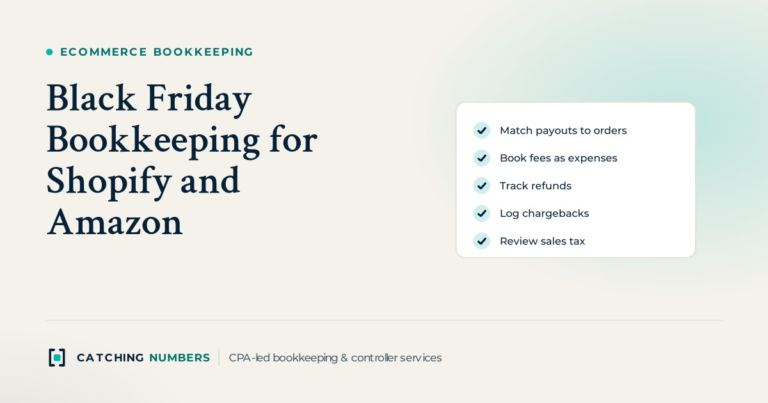
Shopify and Amazon pay you net, so holiday deposits never match your sales. Here is how to record payouts gross, handle refunds and chargebacks, and close November and December cleanly.
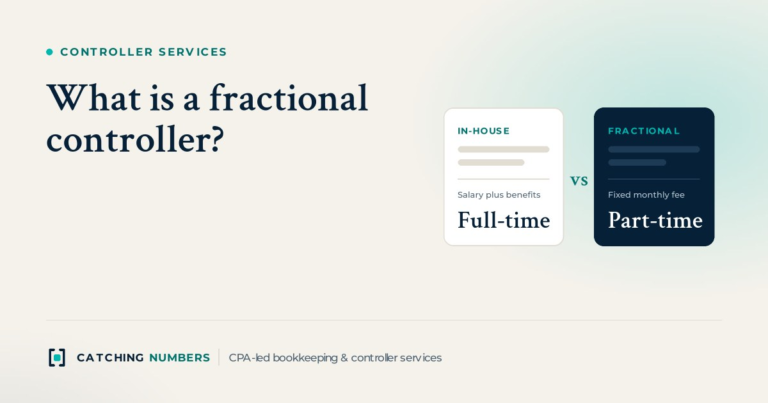
A fractional controller gives you controller-level oversight of the close and your financial statements part-time, for a fixed monthly fee. Here is what they do, what it costs and the signs you need one.
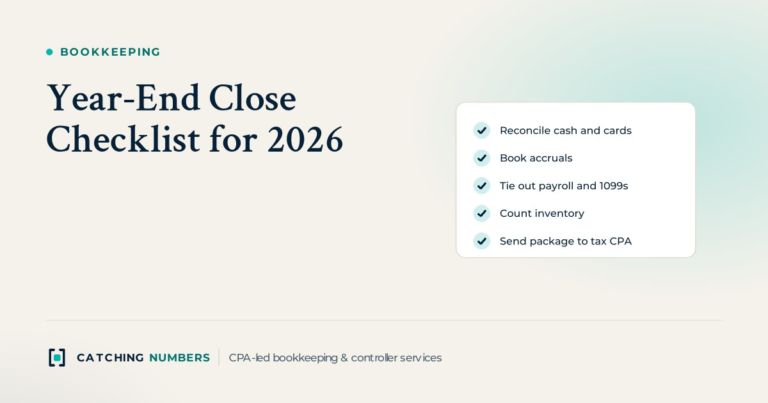
The year-end close steps we finish before a client's tax CPA starts: reconciliations, accruals, payroll and 1099s, inventory, fixed assets, and the 2027 deadlines that set the timeline.
 Bookkeeping & Cloud Accounting