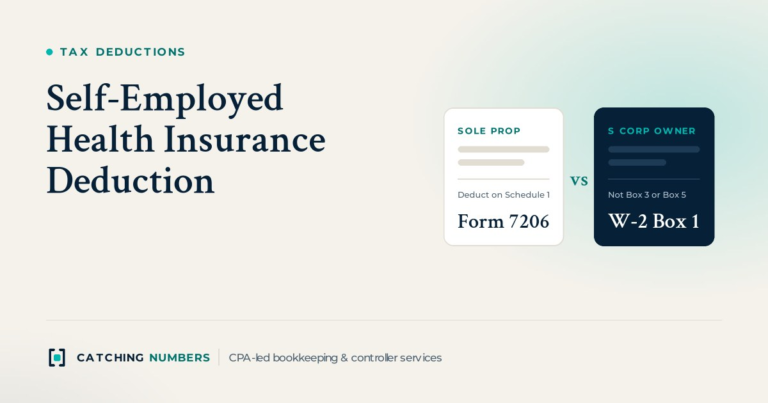
How the self-employed health insurance deduction works for sole proprietors, partners and S corp owners, including the W-2 step S corps often miss. We also cover long-term care limits for 2025 and 2026 and HSA limits for 2026 and 2027.
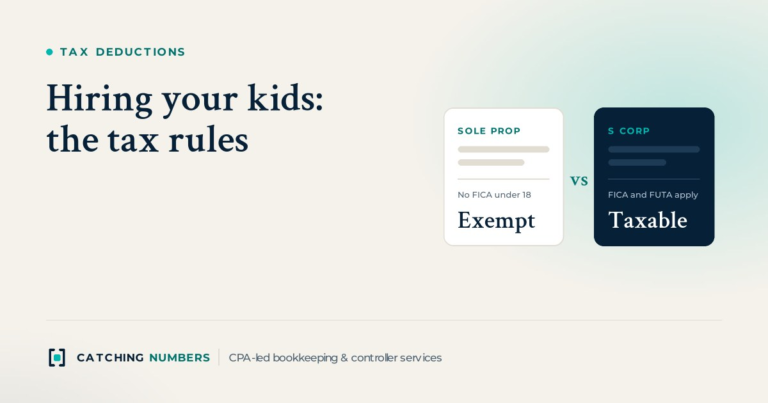
Paying your kids for real work can be deductible, and in a parent-owned sole proprietorship or partnership their wages can skip FICA and FUTA. Here is how the rules differ by entity for 2025 and 2026, and the records that make it hold up.
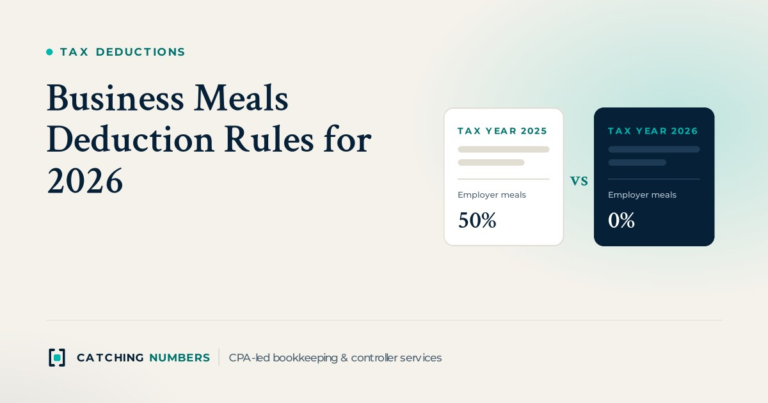
The business meals deduction stays at 50% in 2026, entertainment is still 0%, and employer-provided convenience meals and cafeterias dropped to 0%. Here is what qualifies, what is 100% deductible, and how to code it in your books.
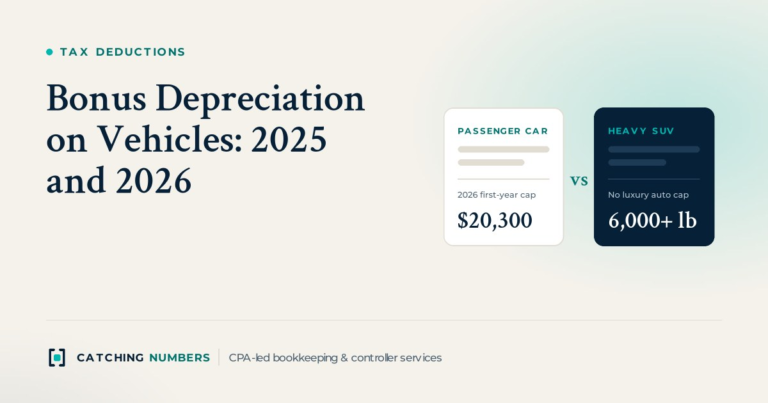
How the vehicle tax deduction for business works in 2025 and 2026: mileage rates, the more-than-50% rule, luxury auto caps, the 6,000 lb heavy SUV rules and 100% bonus depreciation after the One Big Beautiful Bill Act.
An accountable plan lets your company reimburse owners and employees for business expenses tax-free and deduct the cost. Here are the IRS rules, 2026 mileage and per diem rates, a sample plan outline and how to book reimbursements.
QuickBooks Online vs NetSuite, with Intuit Enterprise Suite as the middle ground: what each costs, the signs you have outgrown QuickBooks, and what changes at month-end close when you move.
A CPA firm's look at AI-native accounting software: how Rillet, Campfire, DualEntry and Digits compare on pricing, revenue recognition and multi-entity, and when QuickBooks, Xero or NetSuite is still the better fit.
A CPA-led comparison of five crypto subledgers that sync to QuickBooks Online and Xero: pricing, integrations, security reports and what each means for your month-end close.
 Tax Planning & Deadlines